Featured

Is the “Comedian” worth its price tag ?

Comedian by Maurizio Cattelan 2019

Art Basel’s most popular exhibit this year was a banana duct-taped to a wall. Maurizio Cattelan’s piece titled Comedian was even sold for $120,000. This high price tag for such a simple yet puzzling concept seemed insane to those not familiar with Cattelan.  Cattelan is an Italian artist who seeks to push the limits of what art is.  His artwork is often satirical and humorous.  Many have even compared him to the late Duchamp, another artist known for pushing the limits of art in the 1900’s.  Duchamp is particularly well know for his piece titled Fountain, a urinal signed ,”R.Mutt.” 
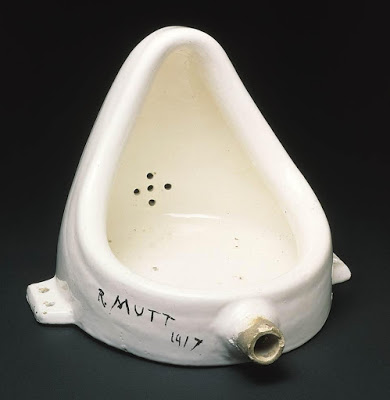
Fountain by Marcel Duchamp 1917

When news of Comedian’s price had reached the public.  It was made even more popular by the amount of people could not fathom the price tag.  Many who mock the art world often use examples similar to the actual work itself to poke fun at what is considered art.  It reminded me of a Glasses Prank from 2016 where a group of teenagers left a pair of glasses on the floor of a museum to see how people would react. It also drew responses of people saying that they could do the same thing. Then, they did do the same thing.  Comedian was instantly made a meme, securing its notoriety across the world.  It wasn’t only memed by the average person, but its likeness was used by celebrities and corporations across the globe to poke fun at the original.  However, all of the press and popularity online undoubtedly helped make the work of art world famous increasing its value.  Those making fun of the buyer paying such an exuberant price helped make it gain even more value.  However, this would not be the end of the banana’s story. Enter David Datuna, a Georgian born artist known for his very public political installations.

Make America Stronger Together by David Datuna 2016

On Saturday December 7th, Datuna made the Comedian even more viral by taking it off the wall and eating it saying that it was an art performance titled Hungry Artist. Datuna may have ate a $120,000 banana, but his simple act may have even made the art worth even more money. Datuna sought to push even further on Cattelan’s concept of a piece by asking the viewer to think about artist’s interact. This continued to make the viral combined art work go down in history.  However, the public wasn’t done interacting with the Comedian.  Roderick Webber also decided to interact with the piece. On Sunday December 8th, the gallery decided to remove the work leaving just the white wall it was taped to.  Webber then used red lipstick to write “Epstien didn’t kill himself” where the Comedian was once displayed.  This statement was used to bring attention to the infamous sex-offender  Jeffrey Epstein who resided in Palm Beach, Florida prior to his stint in a New York prison before being found dead in his cell from an apparent suicide.  This statement was popular online and also used a meme to bring attention to the odd circumstances regarding his death. Even though Webber’s work did not interfere with the original work like Datuna’s performance did, it still added to the notoriety surrounding the Comedian.  The entire situation became a world wide drama with everyone watching to see what would happen next.  This coverage in and of-itself has made this work worth it’s price and left its impact on the art world.  It left art critics and those who could care less intrigued over what is art.  A simple banana and duct tape divided the nation.  However, one thing has become clear. By questioning the value of art, the conversation created value for the piece, and the criticism of the priced justified it.

Webber’s addition to the wall that once showcased the Comedian

How to Appreciate Art

Note: I apologize for the delay of the blog; This been quite a stressful month. I hope to post bit more often now that my semester has ended to make up for my time away from the blog.

” I could do that.”

“It just looks like a bunch of scribbles.”

“Thats just a bunch of squares.”

Those are some common phrases people say when they don’t know what to look for in art. Today I just want to expand on some of the aspects that can be used for art appreciation. Additionally, I would like to note that art appreciation and enjoyment are not necessarily the same thing. You may not like the art; you may think it’s ugly, boring, basic, etc. That’s okay. Your taste is your taste. However, you can still find the value and appreciate art without necessarily liking it. That is especially important if you go to an art gallery or opening. By allowing your self to appreciate the art, you’ll find that artistic experiences are so much more fulfilling and intellectual.

The Artist

What I mean by this is the artist’s life and experiences. You may know an artist is famous for their work, but why are they famous to begin with? This is a good starting point to appreciate and understand art. Artists use their past experiences to influence e and shape their arts. Artists usually seek to tell a message whether that is what beauty is like to them, what’s is happening, or a memory of an event in their past. Understanding an artist’s past can be vital to unpacking the meaning behind their work. For example, knowing that Frida Kahlo had fertility issues and dealt with many issues help us better understand the story behind some of her works.

The Medium

One of the things that can be taken into account is the time it took the artist to create the art. A large part of that is what medium the art is in. This isn’t the end all be all, but it can help show the hours that have been put into a piece. For example, oil paints can take months to fully dry, Watercolors usually need many layers to develop rich saturation, etc. Work can take anywhere from a few seconds to years to create from inspiration and planning to final completion. Some art is also created to be intentionally temporary where as some art can be made to last for a long time. All of these choices are made intentionally and can be taken into account by the viewer.

The Time Period

The time period helps to decode potential meanings of the art. There are many different art periods with their own individual characteristics. Knowing when a painting was made also assists in appreciating the value of a painting. If a work of art was made in a certain artistic period, the originality can be appreciated. The art was the first or one of the first to be made in a certain way. Art History has had many improvements and innovation, so paying attention to the time period can help us appreciate the art.

The Subject Matter

The actual subject matter is what we see that tells us the meaning. Many artists use objects or animals that are representitive of an intangible concept or feeling.The connotation of certain objects can also influence the overall meaning of a painting. Sometimes an artist puts certain objects to juxtapose one other or they make the subject of a painting doing something unexpected to emphasis the irony. Other times objects can just be exactly the object itself without a deeper meaning. Either way, the subject matter of a painting is very important to being able to value and appreciate it.

Quarantine & Art

These days have been quite stressful recently with major changes impacts everyday life. Personally, my college moved to remote learning, and I am now home for the rest of the semester. There is some time to be sad and angry regarding the changes and unsettling news. However, we should use these changes to our advantage. This is a chance to catch up on TV, spend more time with you family, and learn a new skill or two. I will hopefully be updating the blog more frequently, but I was also recently commissioned to do some painting for a company’s labels. I can’t drive, so I will be working on getting my license. I’ll finally have time to read some book I’ve always wanted, and I can continue learning how to airbrush.

Through a historical lens , there have been fair number of pandemics. Sometimes pandemics even lead to great growth in society; for example, the Renaissance followed the bubonic plague. Shakespeare even wrote King Lear and Macbeth while the plague was raging in England. We will get through this and we can better ourselves while we’re at it. This is why I’ve decided to share some great online resources for Art History while we have time to learn more.

Side Note:There are many artists struggling during this time. There are a few ways to support those you love, and here is an article on how to do that.

For those who like to view

Colossal is a website that features contemporary art from across the globe. There are some articles, but most posts are image heavy showcasing a particle artist’s collection.

The Louvre has an expansive collection of artworks online. You can’t go wrong with any of them.

The Museum of Modern Art also has an expansive collection of exhibits and articles.

The National Portrait Gallery has a website up partnering with google to share the museum’s expansive collection.

For those who like to read

Hyperallergic is a website that meshes opinion articles, art history, and current events all in one place. This is probably my favorite website out of all the links I have posted.

Widewalls is a magazine’s website that commonly showcases art exhibits and provides some analytical stories.

For those who like to watch

Baumgartner Restoration is a YouTube channel that features walk throughs of art restoration from beginning to end.

The Social Distancing Festival is a website collecting art from around the world to showcase. There are live-streamed concerts, theatre performances, and dance performances for free. This is a great way to enjoy new art.

For those who like to listen

The Art History Babes is a podcast in which four friends discuss art history with a bit of booze in the mix.

Bad at Sports is a podcast that covers all faucets of the art world, and it’s constant evolution. It discusses art with artists, museum staff, dealers, and owners.

For those who like to create

Adobe Creative Cloud is available for free for two months for everyone and free for students. Creative cloud has applications like adobe Photoshop, Lightroom, and Illustrator. Personally, I’ve been working on improving my Photoshop skills and learning Illustrator. Here’s a guide on how to get access.

Art and Communism- Is it Possible? A look into Ai Wei Wei

One particular intersection that is interesting to me is that of politics and art. As a follow up to my blog about when art became political, I will be exploring some of the ramifications of art becoming political. I will be analyzing art especially the increasing popular genre of protest art in differing political systems. In countries where protests are allowed, so is protest art. However, how do we fit this increasing popular type of art into a political system that restricts protests and political opinions?

Specifically, I will be looking at communism. Currently, there are only  five nations in the world under a communist regime. Communism being defined as, “political and economic doctrine that aims to replace private property and a profit-based economy with public ownership and communal control of at least the major means of production (e.g., mines, mills, and factories) and the natural resources of a society.”They are China, Cuba, Laos, North Korea, and Vietnam. And Interestingly enough, one of the most famous protest artists comes from China.

Ai Wei Wei

Ai Wei Wei is a 62 year old artist from Being, China currently residing in the United Kingdom. He’s made a career out of being an avant-garde artist. He was born to a poet who supported the allowance of citizens to freely and openly. His father was persecuted resulting in a 16 year exile for the family until Ai was 15 years old. He went on to study animation in China and then in the United States. These events really set the stage for Ai’s political views. He grew up in a communist country with a father who was critical of the government. He then lived in the United States giving him a different perspective. In the 90’s Ai returned to China where he continued to work on his art as well as a series of books. Ai started more directly criticizing the government in 2005 with his blog which was later shut down. This is one of the first instances we see of the government not allowing Ai to spread his opinions. Ai continued on with criticism through investigating building structures of schools in Sichuan following an earthquake as well as the names of the students who perished as a result. In 2010, the government demolished his studio citing improper planning even though it was planned with city officials for a new arts area of Beijing . Ai claimed the reasoning behind this was because Ai had produced a documentary that the government considered to be critical while shining a light on notable human rights activists.

In 2011, he was arrested for tax evasion. Arresting a prominent and world known artist sent a message to other activists. The mix of these events caused Ai and his family to leave the country in 2015 following his release from prison.

Ai found a way to make artwork in a communist country that was highly critical of the government. He often expressed and expresses his political opinions online and through his artwork. He, somewhat, made as much work as he could in a communist country. However, he was constantly silenced or shown the power of the government. One could argue solely based off the example of Ai Wei Wei that of course art is allowed in communist countries especially if Ai who is most notable for his protest art was allowed considering protest art could be considered the most detrimental to a communist government. However, Ai Wei Wei rose to prominence through underground methods and truly began his activism in the mid 2000’s. Through deeper analysis this timeline may be what allowed Ai to break through. By becoming prominent, he was able to share his message with an existing audience. He didn’t have to fear being silenced because he knew people would listen. He was even somewhat favorable in China at one point considering he helped designed the 2008 Olympic’s “Bird’s Nest” stadium. It is my belief that if had he started his activism earlier that he would not have become such a prominent figure in contemporary Chinese art.

2008 Olympic’s “Bird’s Nest” stadium

Now that is a very specific example of a very broad question. Is art in a communist government possible? TO BE CONTINUED…

on Ai Wei Wei

Frida, The Unknown

So, last week while I was researching for one of my blog posts I stumbled upon an article about Frida Kahlo. I’ve known about Frida since I was a little girl, and have viewed a lot of her work online. However, I didn’t know much about her history, so I thought I’d share what I found interesting with my readers.

Frida Kahlo was born on July 6, 1907 in Coyoacán, Mexico City, Mexico. She was born to  Wilhelm Kahlo, a German and Matilde Calderon y Gonzalez, a Mexican with Spanish and Indian heritage. She was the second youngest of four daughters in the family. At just 6 years old, she contracted polio giving her a limp the rest of her life due to unequal leg lengths. Her parent’s raised her in a very religious household. However, she was not educated in a religious environment. She was educated at a German School in Mexico City because her father noticed her blossoming interest in academia; Here, she would learn German philosophy from a young age.

 La Casa Azul, Frida’s home during her childhood and later adult life

When she was 18 years old she got into a car accident the sent a bus handrail into her pelvis. The man she was with at the time, Alejandro Gomez Arias, described the accident saying:

“The electric train [streetcar] with two cars approached the bus slowly. It hit the bus in the middle. Slowly the train  pushed the bus. The bus had a strange elasticity. It bent more and more, but for a time it did not break. It was a bus with long benches on either side. I remember that at one moment my knees touched the knees of the person sitting opposite me. I was sitting next to Frida. When the bus reached its maximal flexibility it burst into a thousand pieces, and the train kept moving. It ran over many people.

I remained under the train. Not Frida. But among the iron rods of the train, the handrail broke and went through Frida from one side to the other at the level of the pelvis. When I was able to stand up, I got out from under the train. I had no lesions, only contusions. Naturally the first thing that I did was to look for Frida.

Something strange had happened. Frida was totally nude. The collision had unfastened her clothes. Someone in the bus, probably a house painter, had been carrying a packet of powdered gold. This package broke, and the gold fell all over the bleeding body of Frida. When people saw her, they cried, ‘La bailarina, la bailarina!’ With the gold on her red, bloody body, they thought she was a dancer.

I picked her up….and then I noticed with horror that Frida had a piece of iron in her body. A man said, ‘We have to take it out!’  He put his knee on Frida’s body and said, ‘Let’s take it out.’ When he pulled it out, Frida screamed so loud that when the ambulance from the Red Cross arrived, her screaming was louder than the siren. Before the ambulance came, I picked up Frida and put her in the display window of a billiard room. I took off my coat and put it over her. I thought she was going to die. Two or three people did die at the scene….others died later.”

The Bus depicts the kind of bus Frida would’ve had her accident on. The patrons feature people from all walks of life. It is believed that Frida is depicted on the far right of the painting.

Frida went to the hospital with a crushed pelvis, multiple rib fractures, a spinal column break, and a broken collarbone. She was bedridden from 1925 to 1927 because of her injury. During her recovery time, she was bed ridden. She was forced to give up on her medical dreams, so she started painting. She even had a special easel made, so she could paint in bed.

Frida’s special easel
Self Portrait in a Velvet Dress is one of Frida’s earliest works that she created while bedridden from her accident.

She became her own muse, and she used her art as a way to express the physical pain she was feeling. She was working through a feeling of seeing herself, but not recognizing herself. Her work was commonly focused on the decaying of the human body as well as her trauma. This injury left her unable to have children which is why there is a common theme of fertility throughout her works. She even had multiple miscarriages which are also depicted in her work.

Appearances Can Be Deceiving depicts the image Frida puts out contrasted with the reality she hides underneath featuring her crippled body.

We then see Kahlo get more political after her accident. She joined the Mexican communist party and became a very active member. She tried to push this political ideology forward with her art work. This is even how she met her future husband.

Frida and Diego

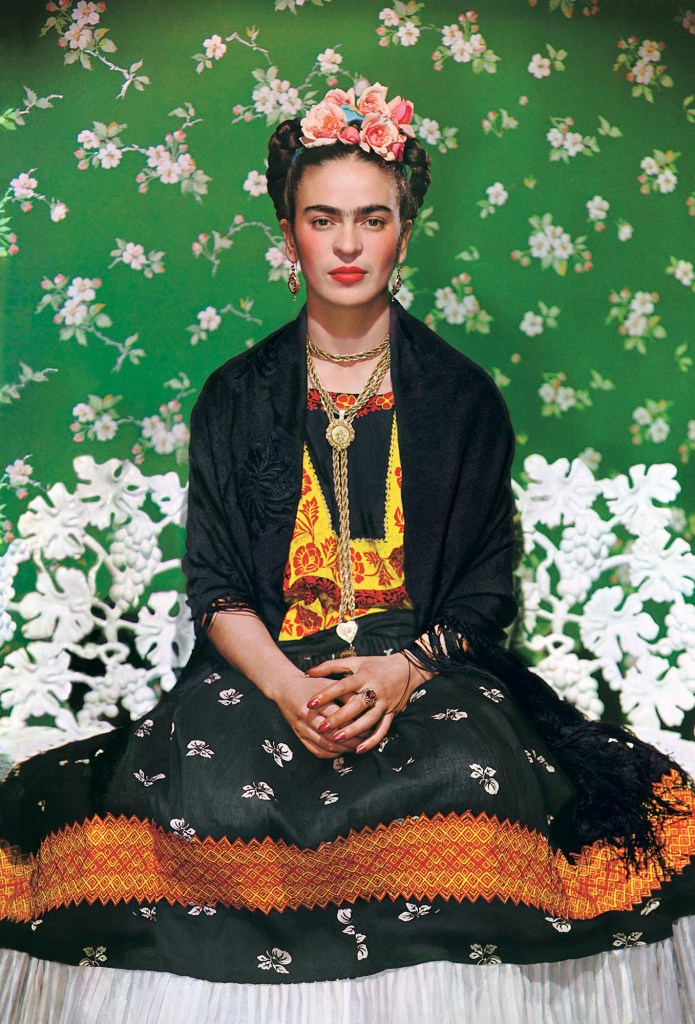
In 1929, Kahlo married Diego Rivera, a Mexican painter over 20 years he elder. They had a tumultuous relationship, but he encouraged Kahlo to pursue art. He was often a critic and ally of her work pushing her to be better. He recognized the talent in her and encouraged her . In the 1930’s Frida lost touch with her German roots and focused on her Mexican heritage. However, she continued with her politics and started spelling her name as Frieda which is more similar to the word for peace in German. This is also when she started dressing in more tradition Mexican apparel rather than the common fashions of the time. This is when she developed the look that most people famously associate her with today.

The Two Fridas show the growing divide she felt with her European heritage and woman hood. Her true self is depicted on the right in the Mexican attire. However, she is still connected to her European self. Her European self has an open and symbolically empty heart under what she is wearing rather than on top of her clothes. The scissors also show the distance from her woman hood as her fertility was taken away in the bus accident.
A collection of Frida’s attire

In 1940 after returning from a solo show in New York City, Frida got divorced. The following years, her medical condition worsened and she had to wear a back-brace. She was also diagnosed with syphilis.

Frida’s backtrace that she painted while recovering. It features a symbol of the communist party on the right as well as a brokenness between her body on the left side painting.
Frida painting in her bed
Another Cast that Frida painted and wore

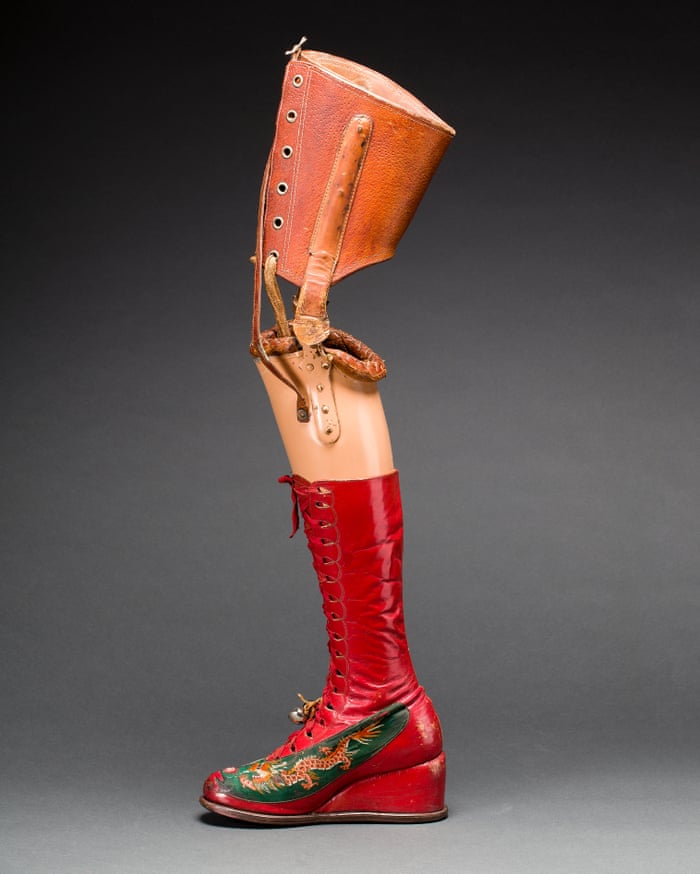
She gained fame, but she was still a struggling artist. She was painting for herself rather than her clients, but purchasers of her work kept her afloat along with a job teaching art in Mexico City. In 1953, Kahlo’s health worsened. She even lost her leg below her knee from gangrene. For one of her last shows, she rode there in an ambulance, and slayed in bed in the middle of the exhibit. She finally passed on July 13, 1954 at the age of 47 in her childhood home.

Frida’s prosthetic leg

Coconut Grove Art Festival

The Coconut Grove Art Festival is an annual festival started in 1963 that happens over President’s Day weekend. It attracts an estimated 120,000 visitors from around the world to view over 360 artists. I went this past weekend, and I just wanted to shares some of the artists’ work that I really enjoyed.

Jesse “Jackson” Kunerth

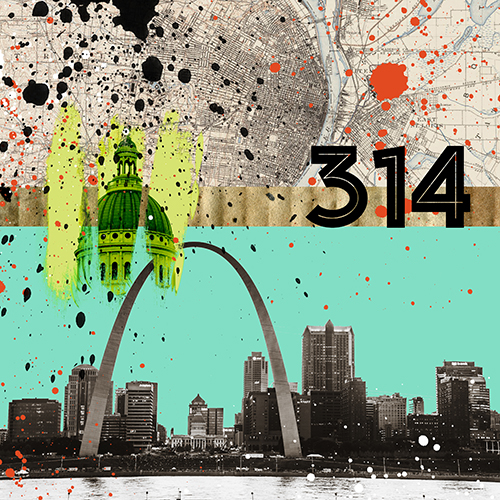
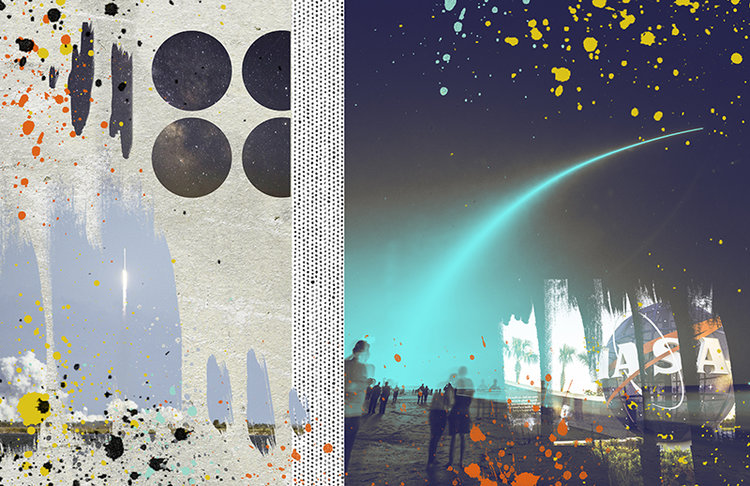
Jackson finds a way to blend photography, texture, color, and shape a bold and eye catching fashion while avoiding being too busy. The graphic look is very interesting, and the color and subject composition are up tp par. I’m usually not a huge fan of digital art, but the layered images and textures work well together in this medium. Every piece is one of a kind as well. There is a reason that he was selected as this year’s poster artist and why I bought a piece myself.

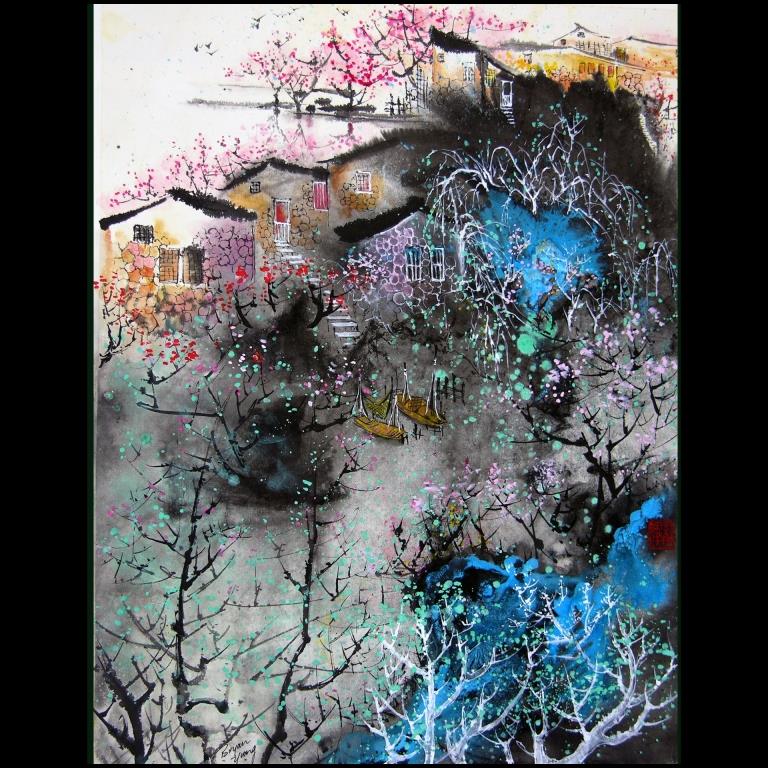
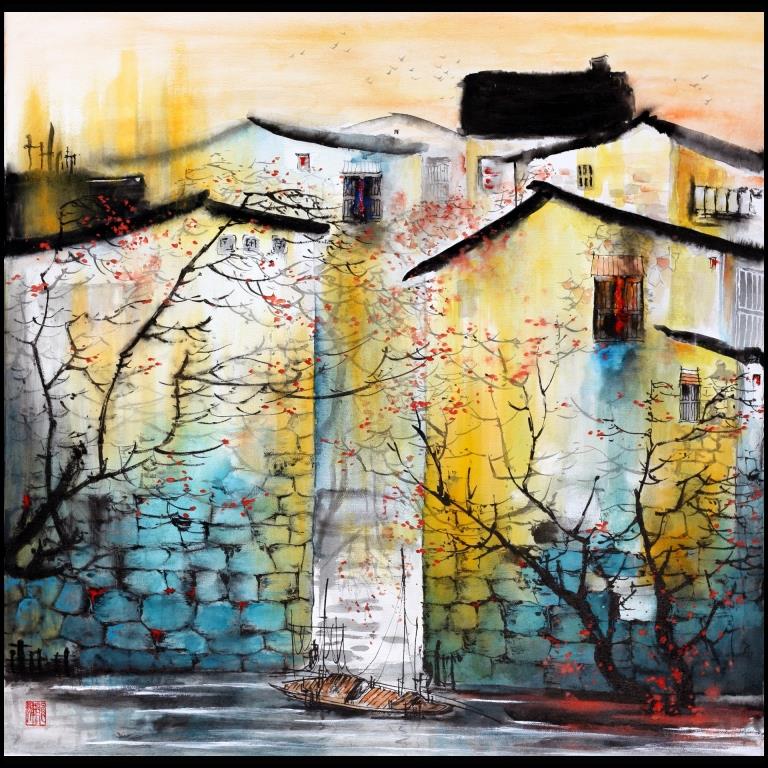
Bryan Yung

As a predominately watercolor artist myself, you may notice that my selection are a bit swayed towards watercolor artists. However, I think there is a uniqueness to Bryan Yung’s work that most people would be able to recognize. Yung mixes traditional Chinese style painting with the western style of watercolor. The traditional dark black brush strokes of Chinese style art are emphasized through the variation in line quality, but the bright colors from the western style make each work pop.

Keith Mountford

Keith Mountford is a watercolor artist who focuses on architectural design and city scapes. He has a keen eye for slight color variations which is what has work stand out to me. He is able to capture the undertones across surfaces that are commonly portrayed to be very one dimensional while maintaining vibrancy. The colors story is bright and clear avoiding getting muddy or overbearing. Value is definitely one of Mountford’s strongest elements. His edges are very crisp which add a charming quality into each work of art.

Ken Orton

Ken Orton is a painter whose art is commonly based in glassware painted with lots of attention to detail. Orton paints with an almost hyperrealist style that has some personal touches. His highlights emphasize the artistic quality of his brushstrokes, and his shadows create the illusion of space. He also uses line quality and color in his atmosphere very well to give the viewer a sense of depth. His lines are crisp, but the colors have smooth gradients for a natural feel to each piece. It’s nothing that I’ve never seen done before, but it is still very impressive.

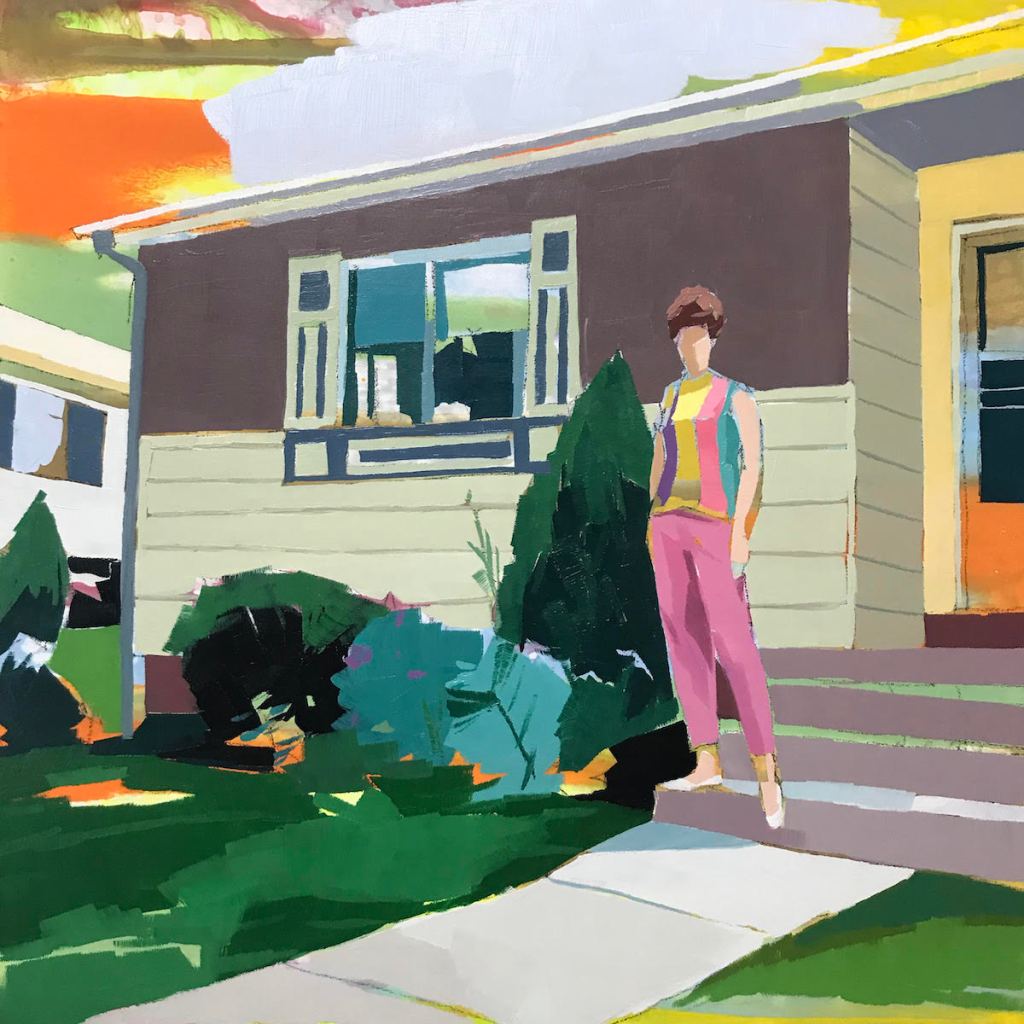
Signe & Genna Grushovenko

When I walked by Signe & Genna Grushovenko’s booth, I was immediately drawn to the use of color as a base and in the block painting itself. Looking at the piece, I wanted to uncover how they created their works. Upon inspection, each canvas is painted with a colorful background, then a underdrawing is put on using charcoal or graphite. More paint is, then, used to paint shapes while leaving the rainbow undertones as the outline oft the piece. I have never seen this technique used before. The paintings are complex yet give me a feeling of simplicity. The composition is also very eye-catching with the inspiration of each piece being an old photograph. This husband and wife duo may have been my favorite artists at this year’s show.

Kimberly Paige

Kimberly Paige is another watercolor artist on my list. She has a light hand and an eye for simple yet bold compositions. Her color palette is limited, but that makes the detail in her work even more impresisve. Her floral designs have a light airiness to them thanks to the use fo watercolor as the medium mixed with a bright white base.

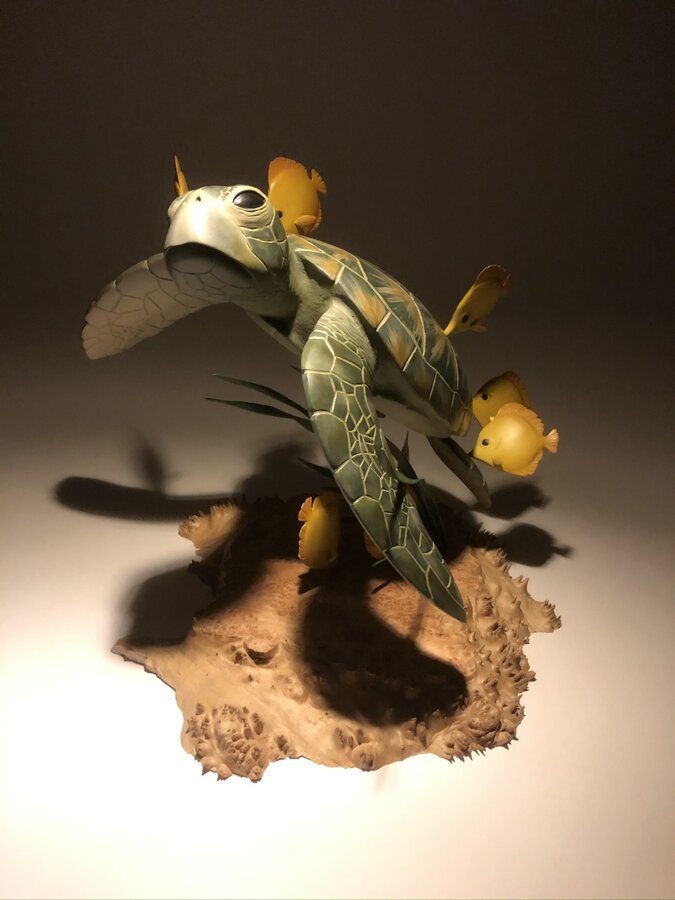
Scot Zuziak

Scott Zuziak is a wood carver. Zuziak carves flora and fauna based off of his many visits to see national parks. The strongest element to his work is his use of texture for each piece. One piece that stood out to me in particular was a pelican carved. Now this wasn’t a static pelican in rest, but the pelican was in motion exposing its feathers in an active position. Each piece is then thoughtfully colored to match the real inspiration. One good test of Zuziak’s skill is the fact that the work has depth without having to be painted many different shades. The work’s natural shadows and highlights help his sculptures come to life.

Janina Tukarski Ellis

Janina Tukarski Ellis is a painter with an eye for composition. Her paintings are fairly simply with muted colored and details, but they have pleasing crowd compositions Her crowd painting were on display this past weekend and emphasized her keen eye for seeing slight variations in cool colors through the interaction of added light and reflection. The negative space is effectively utilized leading the eye around the piece.

Bernie Matz

One of the most interesting elements to this art festival was the inclusion of a culinary arts pavilion that featured local chefs providing demonstrations every hour. Now I’m very biased here in the fact that I was only able to make it to one demonstration over my day at the fair, but I made it to a good one. Bernie Matz is the Culinary Director for Bodega Taqueria y Tequila, a restaurant known for its, “Over-the-top Mexican street food, authentic beverages, and a tricked out taco truck interior.” During the presentation Bernie created a taco that was as if,” Mexico and Cuba had a baby in Miami.” It was a cuban taco that featured a flour tortilla, mojo pork, pickled onions, croquettas, cilantro, and fried plantain straws. It was an easy to make delish mix that perfectly encompassed Miami.

Various Images

When Did Art Become Political?

We see artists in the news constantly for some big political statement they’ve decided to make with their art whether it be something obvious or more subtle. Artists are have been using more and more visual rhetoric to support their political opinions or critique other’s views, but how did we get here? How did art evolve from portraits and landscape to blunt and eye-catching political statements?

Art is a medium the has shifted purpose over time. Originally used as a way to document what one was seeing, it has evolved over time to be more than just a record. It has become a form of expression. It can be used to communicate emotions, provoke thought, and share experiences.

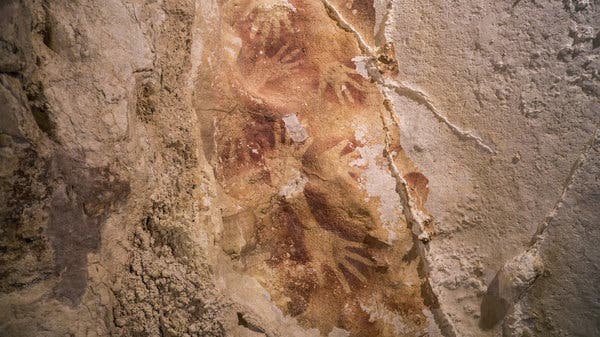
The oldest art found to date is estimated to be done around 40,000 years ago (based on evidence of what was left behind.) This origin of art as we know it lies within the caves once inhabited by our ancestors with the current oldest work being outlines of a hands. This work predates language making it one of the first recorded communication tools known to mankind.

Hand Outlines found in an Indonesian Cave – Kinez Riza

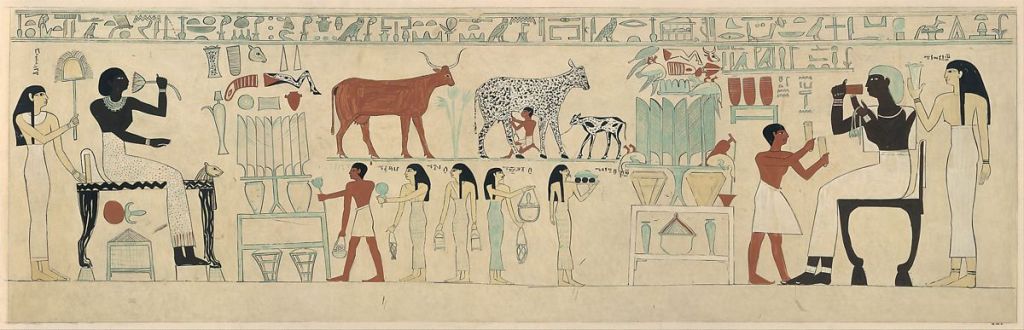
Following the prehistoric period, art shifted more into a spiritual and religious practice during the Ancient Period from 30,000-400 AD . Art during this time was mainly a way of decorating objects, praying deities and ruler, and as a way of telling stories. Artists weren’t expected to change the world’s view or express themselves; they were just there to record and embellish.

Facsimile of the painting on the inner back side of the sarcophagus of Aashytca. 2051–2030 B.C.
Charles K. Wilkinson

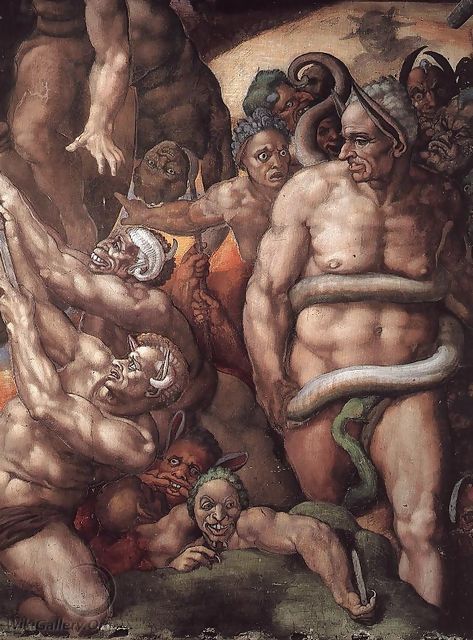
Following the Ancient Period, we see art become closer to what we recognize it as today. It first evolved to be more decorative with illuminated manuscripts. We see a major shift in materials as paper and canvas become more popular. We see this continue on into the 1600’s as art become more and more diverse. The Renaissance was one of the first time we saw artists being more deliberate with their personal touches expressed in the imagery they were creating. One example of this is in the sistine chapel we see Michelangelo’s The Last Judgement. During a walk through with Pope Paul III and Biagio da Cesena, Biagio a master of ceremonies at the Vatican commented that all the nudity was more fitting for a brothel than a chapel. Michelangelo did not appreciate this comment, so he painted Satan in Biagio’s image. Michelangelo had the freedom to put his own opinion into a story telling piece of art.

However, it wasn’t until Romanticism (1770-1850) when we started to see a shift in art from being purely imitation of life to more expressive and imaginative. The art was more dramatic in both look and subject matter. Art no longer imitated life, but it exaggerated life. Artists embraced expressing their individualism and the personal experience. Art started showing greater diversity in expressions and subject matter. It was the start of a major shift in art. Art got more and more personal. It shifted to what we think of art today where we no longer picture a hyper realistic portrait, but we picture the emotion, meaning, and artistic styles associated with certain artists.

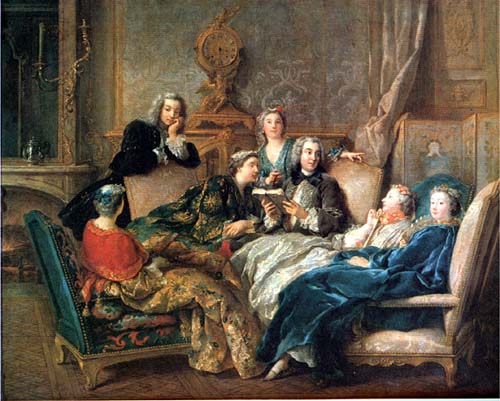
Art continued progressing and eventually became more political as society became more political. The expression of one’s individualism turned from one’s emotions into one thoughts and opinions. Art reflected what was going on at the time of its creation AND the artist’s opinions on what was happening. As society progressed, governments did as well. This usually meant more say rather than less as we got more and more contemporary. Due to the various agricultural and industrial revolutions, people had more time where they could focus on politics rather than just surviving to see the next sunrise. We see early examples of this with the Enlightenment predating Romanticism. New social and cultural institutions like French salons brought a new place of intellectual discussion for the non-governing and governing alike. People were encouraged to discuss their opinions and share.

A reading of MolièreJean François de Troy

Events like the French Revolution and American revolution provided a starting point of the people’s voice in politics. Freedom of expression and art are eternally linked. Once we start working with one the other is sure to follow. Art was merely a extension of this new found freedom of thought and new intellectual pursuits. Art became social commentary. You could make a statement with art and express your political views even if they contrasted the government. This notion became known as protest art, ands it became popular in the 20th century. However, there is debate in the art community exactly when it began. One hypothesis for why it became popular is because of the large anti-war movements happening . Rather than artists’s just voicing their opinion, they would illustrate their opinion as well. One example of anti-war art is Pablo Picasso’s Guernica

Protest art doesn’t just pertain to wars, but across all areas of the political spectrum. It has become increasingly prominent by current artists like Banksy, an anonymous street artist known for his social and political commentary through stencil art.

Unlike the past, artists don’t have to be the most touted painter of their time. They just have to make a statement with their work. The rise of protest art doesn’t even have to be art in a traditional form anymore because it has spread to the digital mediums. There has also been a rise in popularity of performance art as protest art. One example is the Russian group Pussy Riot who shares their political ideology through live performances and videos online.

With this shift to protest art and political art becoming the norm, many questions come up about what the future of art holds. What we view as art is changing, and so is the very essence of what makes up art itself (philosophy of art.) Society has pulled art with it. When society evolves, the relics involved also evolve, so when society allowed political freedom, that is when art became political. Art is a sign of the times.

For more info on the specific periods check out this timeline

To Restore or not to Restore.

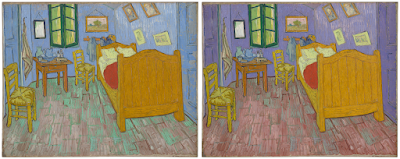
Some things in life are inevitable.  We can’t control time, so everything must age including art.  The art we see now even looks different over time.  Many famed older paintings look much different today than when the original artist played their last layer of varnish.  Here are some popular paintings next to what it originally looked like.


Although it has been theorized that Van Gogh was color blind, chemist’s determined the original color of the paint used in My Bedroom based off of a paint chip from the orginal.
The yellow tint seen now in da Vinci’s  Mona Lisa was non existent when originally  finished.

With the rise in availability of art to the masses, viewers are now starting to ask what painting originaly looked like.  This is where art restoration come into play.  Art Restoration is the practice of returning art to its original state whether that means cleaning a dirt varnish, filling in chips, or repairing sections of the painting to make look as close to possible to how the artist saw it.  Art Restoration is an art by itself and has been becoming increasingly popular online do to the satisfying nature of the before and after videos.  Restoration and Conservation efforts are also constantly improving meaning painting that could not be restored 50 years ago are now able to thanks to scientific innovations.

The Restoration of Ave Maria Narrated Version


However there is some debate on whether art should be restored or not.  For many people, art is though to be timeless.  However, aging affects the varnish of painting and their overall expereicne.  Much of the debate regarding why we shouldn’t restore paintings focus on everyones unique experience with the painting.  

The debate on both sides asks what is the essence of art.  Is it the subject matter and the ideology behind a piece, or is it the experience?   Some argue that art is indeed time sensitive.  Part of the art is the experience and setting that you view it in. Someone’s perception of a piece is art is heavily affected by external factors.  For example, being in two different shows with different names can affect the meaning of the piece for a viewer.  If we allow these external factors to affect our viewing then time is no different.  We experience pieces at different times and different points within our lives.  As we age, we should allow art to age.  Let the varnish yellow because it’s part of the experience of seeing an older painting. No one has the same experience, and we shouldn’t let them because art viewing is so individualized.

However, those on the other side of the debate after bring up trying to understand the artist’s perspective.  They argue that we should see art as the artist intended.  We should see how a painting looked when the artist finally decided the piece was done and put the paintbrush down.  Van Gogh’s work might not’ve been appreciated until after he was dead, so why not see it as he originally intended.

Either way you fall on the debate, it is important to remember that not all art can and should be restored. For example, some artists specifically ask that their art is not restored to show that the art is aging and temporary.  For other works of art, we don’t have the means to restore them yet.  For example,  DaVinci’s Mona Lisa was painted in an experimental painting medium making it very complicated to restore.  A restoration attempt could possibly destroy the painting.  However, if it is not restored its varnish will continue too yellow and the image could become completely clouded.  Either way, art restoration is changing how we view art thanks to advances in the scientific field.

My First Blog Post

Be yourself; Everyone else is already taken.

— Oscar Wilde.

This is the first post on my new blog. I’m just getting this new blog going, so stay tuned for more. Subscribe below to get notified when I post new updates. I started this blog last year on a different site. However, that website did not have all of the capabilities I wanted in a blog. Therefore, I have decided to move it over here.

Introducing…

Hi, my name is Megan Mikuen, and I’m an 18 year college student from Florida who is interested in sharing arts experiences with the world.  I love creating and sharing art, so I wanted to start a blog to do just that.  I will be sharing some of my favorite artists, fun art history tidbits, and my own work.  Please feel free to reach out if you have a certain topic or artist that you think is particularly interesting.  
See you soon!

Design a site like this with WordPress.com
Get started