
So, last week while I was researching for one of my blog posts I stumbled upon an article about Frida Kahlo. I’ve known about Frida since I was a little girl, and have viewed a lot of her work online. However, I didn’t know much about her history, so I thought I’d share what I found interesting with my readers.
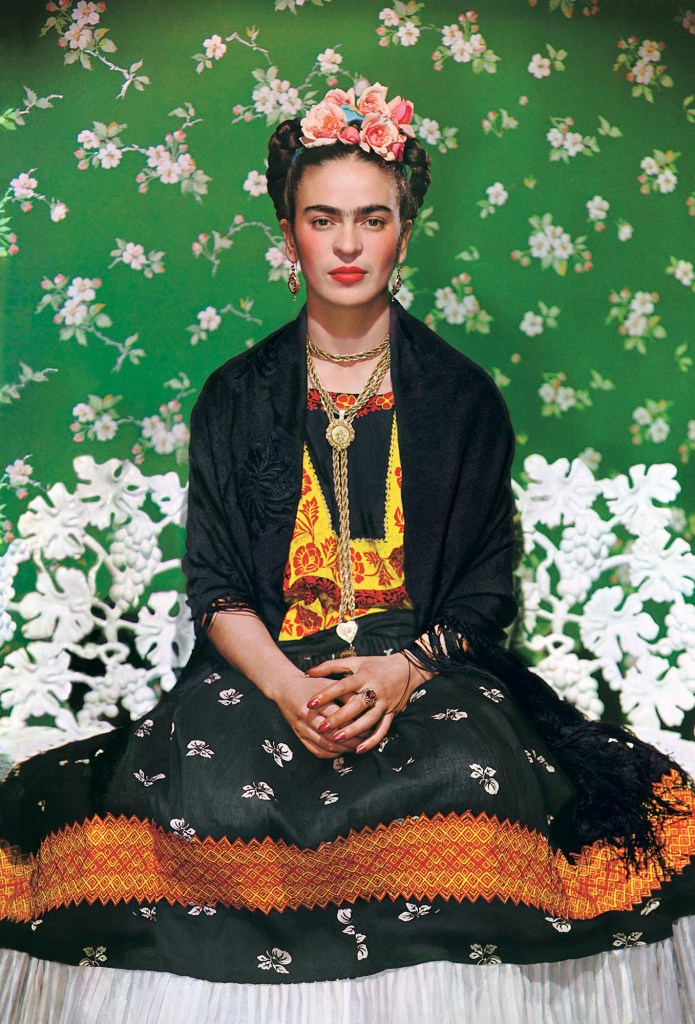
Frida Kahlo was born on July 6, 1907 in Coyoacán, Mexico City, Mexico. She was born to Wilhelm Kahlo, a German and Matilde Calderon y Gonzalez, a Mexican with Spanish and Indian heritage. She was the second youngest of four daughters in the family. At just 6 years old, she contracted polio giving her a limp the rest of her life due to unequal leg lengths. Her parent’s raised her in a very religious household. However, she was not educated in a religious environment. She was educated at a German School in Mexico City because her father noticed her blossoming interest in academia; Here, she would learn German philosophy from a young age.

When she was 18 years old she got into a car accident the sent a bus handrail into her pelvis. The man she was with at the time, Alejandro Gomez Arias, described the accident saying:
“The electric train [streetcar] with two cars approached the bus slowly. It hit the bus in the middle. Slowly the train pushed the bus. The bus had a strange elasticity. It bent more and more, but for a time it did not break. It was a bus with long benches on either side. I remember that at one moment my knees touched the knees of the person sitting opposite me. I was sitting next to Frida. When the bus reached its maximal flexibility it burst into a thousand pieces, and the train kept moving. It ran over many people.
I remained under the train. Not Frida. But among the iron rods of the train, the handrail broke and went through Frida from one side to the other at the level of the pelvis. When I was able to stand up, I got out from under the train. I had no lesions, only contusions. Naturally the first thing that I did was to look for Frida.
Something strange had happened. Frida was totally nude. The collision had unfastened her clothes. Someone in the bus, probably a house painter, had been carrying a packet of powdered gold. This package broke, and the gold fell all over the bleeding body of Frida. When people saw her, they cried, ‘La bailarina, la bailarina!’ With the gold on her red, bloody body, they thought she was a dancer.
I picked her up….and then I noticed with horror that Frida had a piece of iron in her body. A man said, ‘We have to take it out!’ He put his knee on Frida’s body and said, ‘Let’s take it out.’ When he pulled it out, Frida screamed so loud that when the ambulance from the Red Cross arrived, her screaming was louder than the siren. Before the ambulance came, I picked up Frida and put her in the display window of a billiard room. I took off my coat and put it over her. I thought she was going to die. Two or three people did die at the scene….others died later.”

Frida went to the hospital with a crushed pelvis, multiple rib fractures, a spinal column break, and a broken collarbone. She was bedridden from 1925 to 1927 because of her injury. During her recovery time, she was bed ridden. She was forced to give up on her medical dreams, so she started painting. She even had a special easel made, so she could paint in bed.


She became her own muse, and she used her art as a way to express the physical pain she was feeling. She was working through a feeling of seeing herself, but not recognizing herself. Her work was commonly focused on the decaying of the human body as well as her trauma. This injury left her unable to have children which is why there is a common theme of fertility throughout her works. She even had multiple miscarriages which are also depicted in her work.

We then see Kahlo get more political after her accident. She joined the Mexican communist party and became a very active member. She tried to push this political ideology forward with her art work. This is even how she met her future husband.

In 1929, Kahlo married Diego Rivera, a Mexican painter over 20 years he elder. They had a tumultuous relationship, but he encouraged Kahlo to pursue art. He was often a critic and ally of her work pushing her to be better. He recognized the talent in her and encouraged her . In the 1930’s Frida lost touch with her German roots and focused on her Mexican heritage. However, she continued with her politics and started spelling her name as Frieda which is more similar to the word for peace in German. This is also when she started dressing in more tradition Mexican apparel rather than the common fashions of the time. This is when she developed the look that most people famously associate her with today.


In 1940 after returning from a solo show in New York City, Frida got divorced. The following years, her medical condition worsened and she had to wear a back-brace. She was also diagnosed with syphilis.


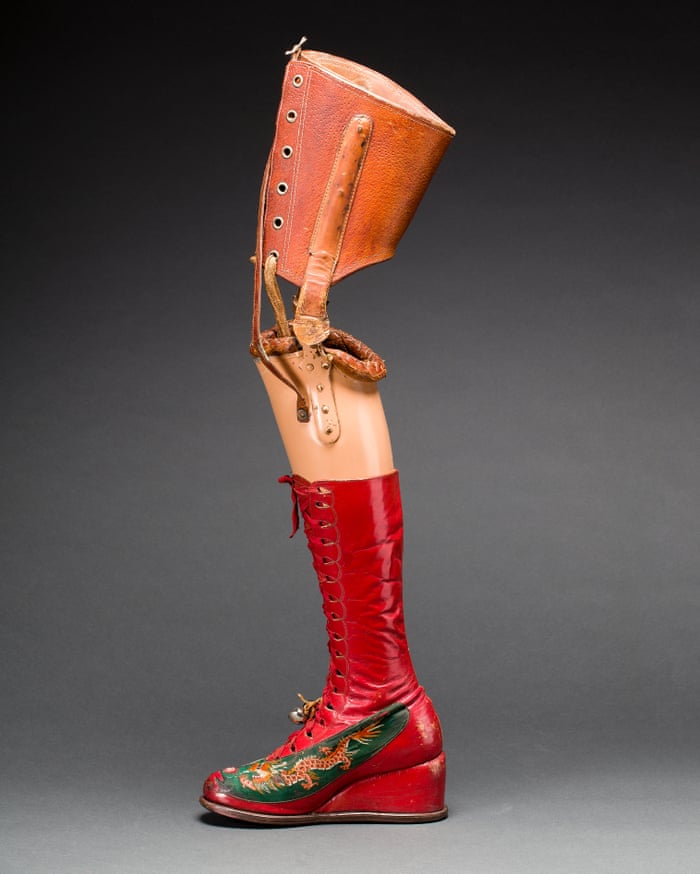
She gained fame, but she was still a struggling artist. She was painting for herself rather than her clients, but purchasers of her work kept her afloat along with a job teaching art in Mexico City. In 1953, Kahlo’s health worsened. She even lost her leg below her knee from gangrene. For one of her last shows, she rode there in an ambulance, and slayed in bed in the middle of the exhibit. She finally passed on July 13, 1954 at the age of 47 in her childhood home.
 artally.art.blog